Key Takeaways
- A 2024 Navy environmental assessment says the planned data center at Lemoore Naval Air Station would use closed-loop "waterless" cooling.
- The only water the building is expected to use is for sinks and toilets serving about 20 employees.
- The project would take 930 acres out of the base's agricultural program, saving an estimated 1,040 acre-feet of irrigation water a year.
- Ameresco holds the 37-year lease through Oct. 31, 2053, and base spokesperson Sarah Thrasher said the data center agreement isn't finalized.
Twenty employees. That's how many people the Navy expects to staff a 600,000-square-foot, 100-megawatt AI data center planned for Lemoore Naval Air Station, and according to the Navy's own environmental paperwork, their sinks and toilets are the only water the building should use. That's the answer to a question Kings County residents have been asking. In August, residents protested proposed "mini" data centers on state land in Tulare and Kings counties, mostly out of fear over how much water they'd pull from the basin.
SJV Water ran a story Tuesday calling the Lemoore center's water use a mystery. Later that day it posted an editor's note saying the story was in error, pointing to a 2024 assessment indicating the center will use waterless cooling and won't need extra water supplies.
How the cooling works
The document is the Navy's final supplemental environmental assessment, dated August 2024. It lists Jesse Martinez of Naval Facilities Engineering Systems Command Southwest in San Diego as the point of contact.
Chillers outside dump the heat. Inside, air handlers move that heat through coils and a closed fluid loop. The main loop is "free cooling" on heat transfer fluid, with a backup mechanical loop running on refrigerant. Wastewater would go to a septic system.
Except for drinking water for the staff, the lessee would meet all of the project's water needs from offsite sources, the assessment says, and the base wouldn't supply water for construction. It finds no groundwater use from building or running the data center or the energy systems around it.
Those energy systems are big. The plan allows up to 425 megawatts of solar, battery storage, an EV station with up to 20 fast chargers and up to 185 megawatts of backup generation. Grading would take about 128 acre-feet of water for dust. Panel washing needs about 21.25 acre-feet of deionized water a year, trucked in by the lessee from an offsite source.
The ground it comes out of
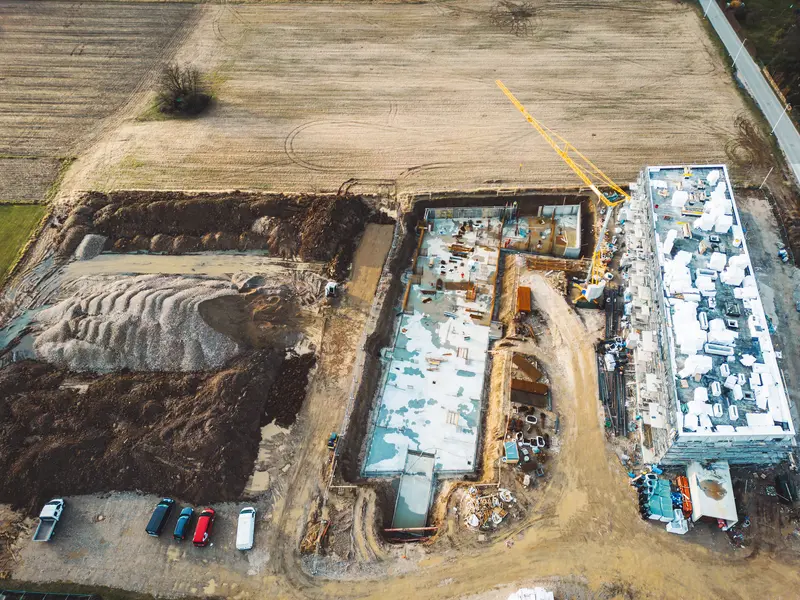
All of it sits on a 930-acre parcel in the southeast part of the base. Ameresco got the lease in January 2024 when it bought Bright Canyon Energy, which had held the ground since 2019 without building anything. The Navy, Ameresco and CyrusOne announced the data center in September 2025.
The Navy counts the parcel in the base's ag program, which Westlands Water District supplies with Central Valley Project water. That supply swings. In a full allocation year, each irrigable acre gets 2.6 acre-feet. Allocations since 2003 have run from zero in 2014, 2015, 2021 and 2022 to 100% in 2006 and 2017, averaging 43%. At that average, the assessment figures pulling 930 acres saves 1,040 acre-feet a year.
This water year's allocation opened at 15% and climbed to 31%, SJV Water reported.
What isn't settled
Sarah Thrasher, the base spokesperson, wrote in an email that the base's water use and rights aren't public and that the data center agreement isn't finalized.
Westlands spokesperson Matt Mahon sent questions back to the Navy.
"Any other questions about the base or the data center water use will need to be directed to the Navy," Mahon wrote in an email.
On paper, Westlands has rights to make 5,000 acre-feet a year available to the base, and it delivered 1,366 acre-feet there from March through August, according to the district's Sept. 15 board packet.
Ameresco has said the first portion should come online in 2027. The lease language lets the Navy approve leaving the parcel vacant when the lease runs out if it no longer has a Westlands allocation, and the assessment says it might not go back to farming.
Source
Read the original story from sjvwater.org.